



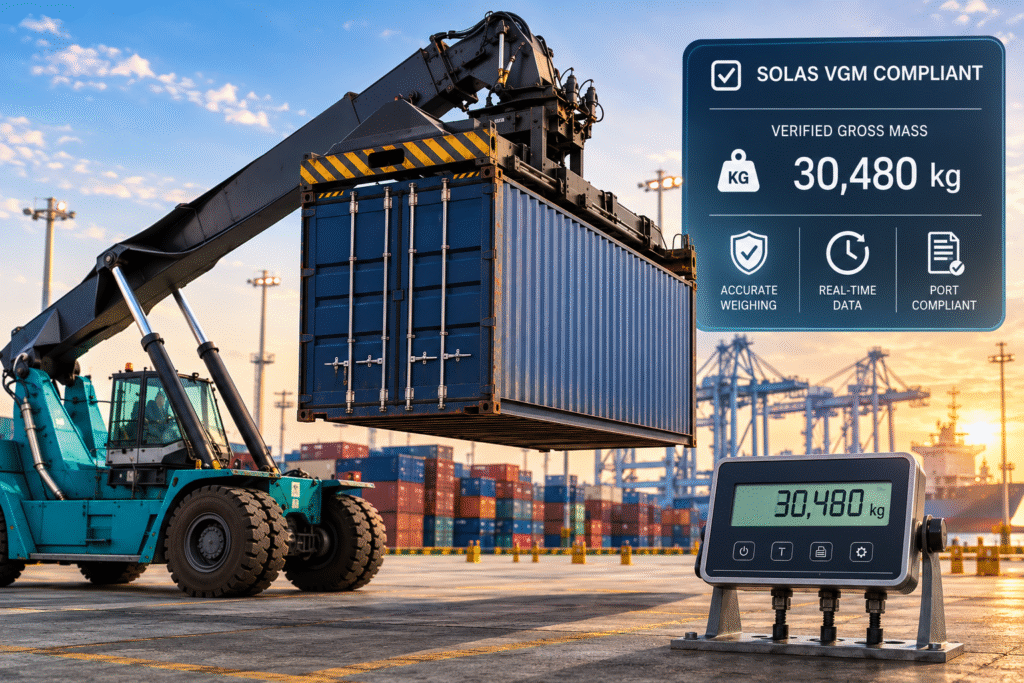
Walk along any container terminal in Jebel Ali, Khalifa Port, Dammam, or Jeddah Islamic Port on a busy shift, and you’ll notice how much rides on a single number: the weight of a box. Get it wrong, and the consequences ripple across the supply chain from vessel stability to stacking sequences to the fines regulators are increasingly ready to hand out. This is why terminal operators across the Gulf are re-examining who they trust as their weighing scale supplier.
Table of Contents
The SOLAS VGM Rule Remains a Critical Requirement
Since July 2016, the International Maritime Organization’s SOLAS Chapter VI, Regulation 2 has required shippers to provide a Verified Gross Mass (VGM) for every packed container before it is loaded onto a vessel. Nearly a decade later, the obligation hasn’t gone away — Port authorities and shipping lines across the UAE and Saudi Arabia continue to require SOLAS-compliant Verified Gross Mass (VGM) documentation before containers are loaded onto vessels.
For terminal managers and container terminal operators, that means the weighbridge or container stacker scale sitting under a reach stacker or forklift isn’t just equipment, it’s the last line of defense against a VGM discrepancy that can delay a vessel or lead to a penalty from the port authority.
Why the Choice of Weighing Scale Supplier Really Matters
Not every scale on the market is engineered for the punishment a container terminal dishes out daily. Salt air, dust, constant vibration, and round-the-clock operation wear down equipment not built with ports in mind. This is where the credentials of your weighing scale supplier become an operational concern, not just a procurement checkbox.
A dependable weighing scale supplier should be able to show:
Load cells and indicators that are rated for outdoor, high-humidity, coastal environments
Integration with ERP systems and compatible port management software, depending on the installed solution.
Local calibration, servicing, and spare parts support within the UAE and Saudi Arabia, not a vendor working through a distant regional office
A track record with brands recognized in the weighing industry, such as Tamtron, Zemic, Keli, and others.
When procurement managers and port engineering managers evaluate vendors, these details separate a supplier who understands ports from one simply repackaging a standard industrial scale.
Static Weighing vs. Dynamic Weighing in Port Operations
Ports need both static and in-motion weighing, based on the workflow. A Static Weighing System Dealer supplies equipment such as platform scales and pit or pit-less weighbridges, where a container, truck, or chassis comes to a complete stop to have its weight captured. Container stacker scales, and forklift scales, on the other hand, are designed to capture the VGM as a container is lifted, without interrupting equipment flow on the yard.
Both approaches have their place. A terminal relying only on static weighbridges may still face gate bottlenecks, while one that relies only on dynamic weighing may need static scales for checking or bulk cargo. This is why procurement teams increasingly prefer a single vendor who can advise on, and supply, both systems, rather than juggling two service contracts.
What a Container Stacker Scale Actually Solves
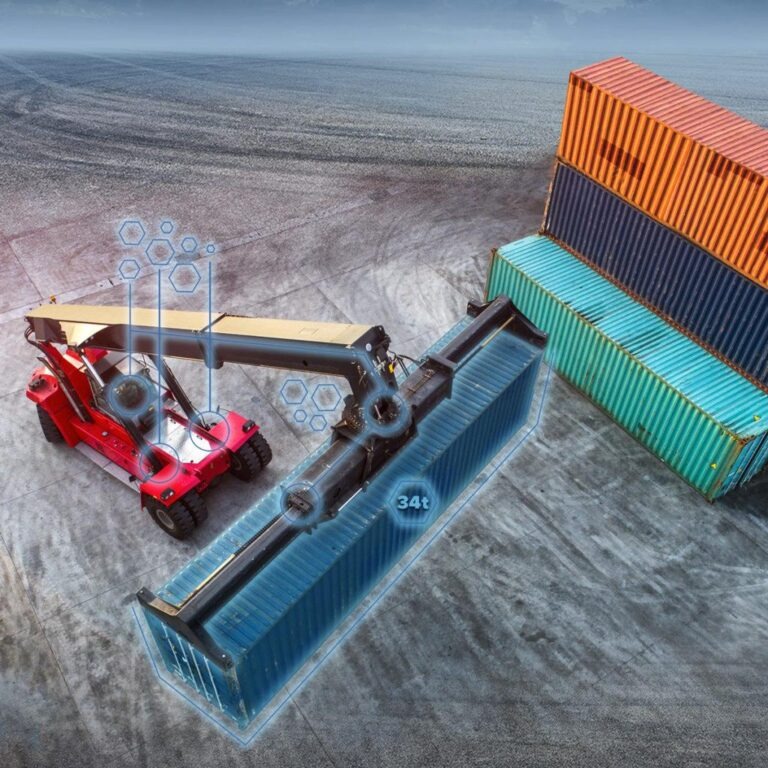
A container stacker scale is mounted onto load-handling equipment that reach stackers or forklifts and uses load cells to measure a container’s weight as it is lifted or moved. Done correctly, this gives terminal operators an accurate VGM reading during normal handling, without a separate trip across a weighbridge.
For container terminal operators managing high throughput, this matters for a few practical reasons:
It reduces congestion, since containers don’t need a separate weighing stop.
It supports SOLAS compliance by capturing VGM data at the point of handling.
It can feed weight data into a TOS or cloud-based reporting system, giving port engineering and maintenance managers real-time visibility into loads and weighing activity across the yard.
The Real Cost of an Unreliable Supplier
Maintenance managers know the real damage usually isn’t the initial malfunction, it’s the downtime spent waiting for a technician, a spare part, or a calibration certificate from a supplier not set up to respond quickly within the region. In a terminal running around the clock, even a few hours of a stacker scale being out of service can cascade into missed vessel windows.
This is why shipping companies, freight forwarders, container freight stations, and inland container depots even when they aren’t purchasing the equipment — feel the impact of a port’s supplier choice. A delay at one terminal from a faulty stacker scale can ripple through schedules for everyone relying on that port, including marine and port consultants who plan around those timelines.
Choosing a Partner, Not Just a Product
For port authorities and terminal management teams across the UAE and Saudi Arabia, the decision is not only about just buying a scale — it’s about selecting a partner who understands SOLAS requirements, regional conditions, and the pace at which ports really run. Working with an established industrial scale supplier that also provides calibration, spare parts, and after-sales support locally can make the difference between a scale that may do its job for many years and another one that becomes a recurring maintenance headache.
HIRS Global has supported industrial and port weighing needs across the UAE and Saudi Arabia since 2013, backed by a parent legacy of over five decades in the weighing industry, offering container stacker scales, lock scales, and static weighbridge solutions built for demanding terminal environments — backed by regional servicing and calibration support. If your terminal is due for a VGM weighing setup review, it’s worth having that conversation before the next audit, or vessel delay, forces the issue.
FAQ
Why is Verified Gross Mass (VGM) important?
VGM is mandatory under the International Maritime Organization’s SOLAS regulations. It helps improve vessel stability, prevents overloading, enhances safety during cargo handling, and ensures compliance with port and shipping line requirements.
How do static weighing systems differ from dynamic weighing systems?
Static weighing systems require the vehicle or container to come to a complete stop before weighing. Dynamic weighing systems, such as container stacker scales, measure weight while the container is being lifted or moved, minimizing workflow interruptions.
How often should port weighing equipment be calibrated?
Calibration frequency depends on local regulations, company policies, equipment usage, and manufacturer recommendations. Regular calibration is essential to maintain weighing accuracy and support ongoing SOLAS compliance.