



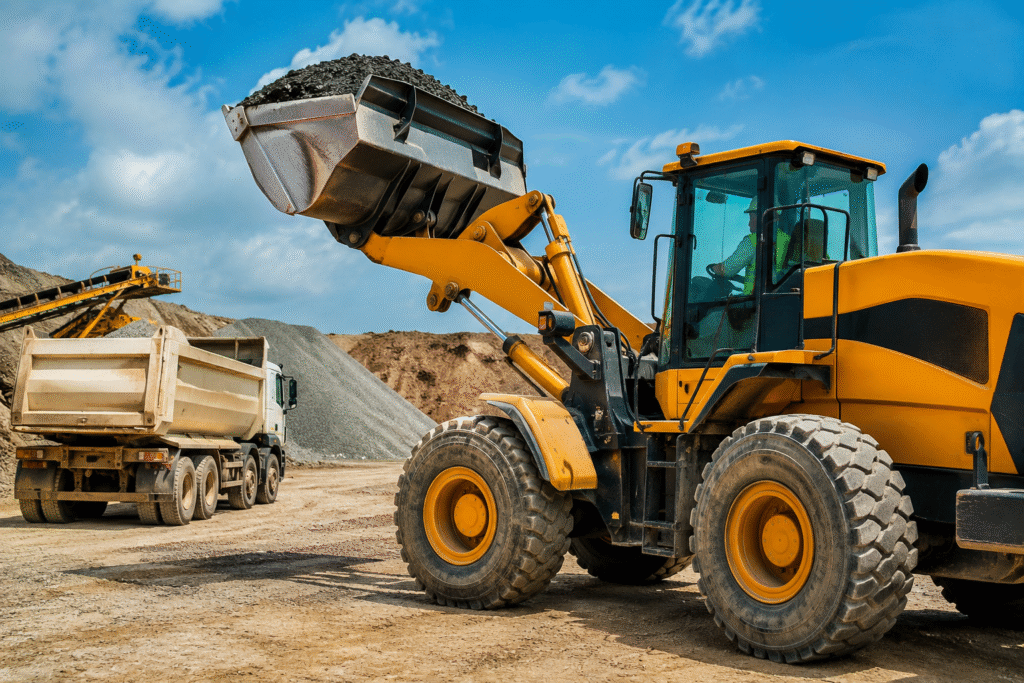
Every ton loaded on a construction or mining site has a cost, and having that weight wrong even by a small margin gets up fast in fuel, fines, and lost material. This is the reason why more site managers now work with a trusted dynamic weighing system supplier to fit their wheel loaders with scales onboard that weigh material as it’s lifted, without stopping the machine. Real-time weighing has moved to a standard requirement on serious jobsites.
Table of Contents
How Wheel Loader Scales Work
A wheel loader scale is a weighing system that has been built into the machine’s hydraulic circuit or boom arm. As the bucket lifts a load, load cells and other weight-sensing components built into the machine capture the force in real time, and a calibrated onboard system converts that data into an accurate weight reading in the cab. Because the reading happens during normal lifting motion, there’s no need to pause the loader or run it over a separate weighbridge for every load. This is the main idea behind dynamic weighing: capturing weight in motion as part of the loading cycle.
For sites handling aggregate, ore, sand, or demolition debris, this matters. Trucks are loaded to their legal limit without guesswork, operators get instant feedback on each pass, and supervisors get a total of material moved in the shift without slowing production.
Choosing the Right Weighing System Supplier
Not all onboard weighing systems are built the same, so the choice of supplier affects accuracy, durability, and long-term maintenance costs. A capable dynamic weighing system supplier should offer systems that are calibrated for your specific model, rated for the vibration and dust of a working site, and backed by local service and spare parts support. Look for suppliers who provide:
- Cloud or remote data integration for accessing loading information where supported.
- Data logging that integrates with fleet management software
- Sensors rated for harsh mining or quarry environments
- Straightforward calibration that doesn’t demand constant site visits
A reliable dynamic weighing system supplier will also guide you through installation and operator training, since a short learning curve helps teams trust and use the readings confidently. Businesses evaluating a new supplier should also compare warranty terms, since onboard sensors are among the most exposed components on a working machine.
Static Weighing: The Other Half of the Equation
While wheel loader scales handle in motion weighing, many sites rely on static weighing for verification activities, billing or checking – weighbridges, platform scales, and truck scales that weigh a stationary vehicle or load. Static systems are more precise for final, certified measurements, which is why many operations use both: dynamic scales for day-to-day efficiency in loading and static scales for periodic checking or official transactions.
This is where an experienced static weighing system dealer becomes valuable. A good dealer can size a weighbridge correctly for your heaviest vehicles, ensure it meets local metrology standards, and provide calibration certificates for audits or billing. Pairing an onboard dynamic system with a dependable static weighing system dealer gives a site the best of both: speed during loading and certified accuracy for record-keeping.
Why Real-Time Weighing Matters for Compliance and Cost Control
Overloading trucks is one of the most common and costly mistakes on construction and mining sites. It leads to fines, faster tire and axle wear, and risk of safety on roads. Underloading wastes trips and fuel. Real-time wheel loader scales solve problems by providing operators immediate, actionable data in place of visual estimation or guesswork.
Beyond cost control, accurate weighing data supports better reporting. Managers can track material moves per shift, operator, or project phase, which improves forecasting and client invoicing. For mining operations, this data often feeds directly into production reports and reconciliation with plant totals, making the weighing system part of the operational backbone rather than an add-on gadget.
Conclusion
The best sites don’t treat weighing as an afterthought – they build it into every load, from the first bucket to the final invoice. A dynamic weighing system supplier will provide real-time accuracy in motion, while a calibrated weighbridge locks in precision for billing and compliance. HIRS Global supplies and supports both across the UAE, Saudi Arabia and Oman, from onboard scales built for tough jobsite conditions to calibrated weighbridges backed by local service. Ready to close the loop between speed and precision on your site? Contact HIRS Global today to find the perfect weighing solution for your fleet.
FAQ
Why are wheel loader scales important?
They help prevent overloading and underloading, reduce fuel waste, improve productivity, and provide accurate loading data for better site management.
What is the difference between dynamic and static weighing?
Dynamic weighing measures loads while the loader is in motion, whereas static weighing measures the weight when the vehicle or load is completely stationary, such as on a weighbridge.
How often should a wheel loader scale be calibrated?
Calibration depends on usage and site requirements, but regular calibration is recommended to maintain accuracy and ensure reliable weight readings.