



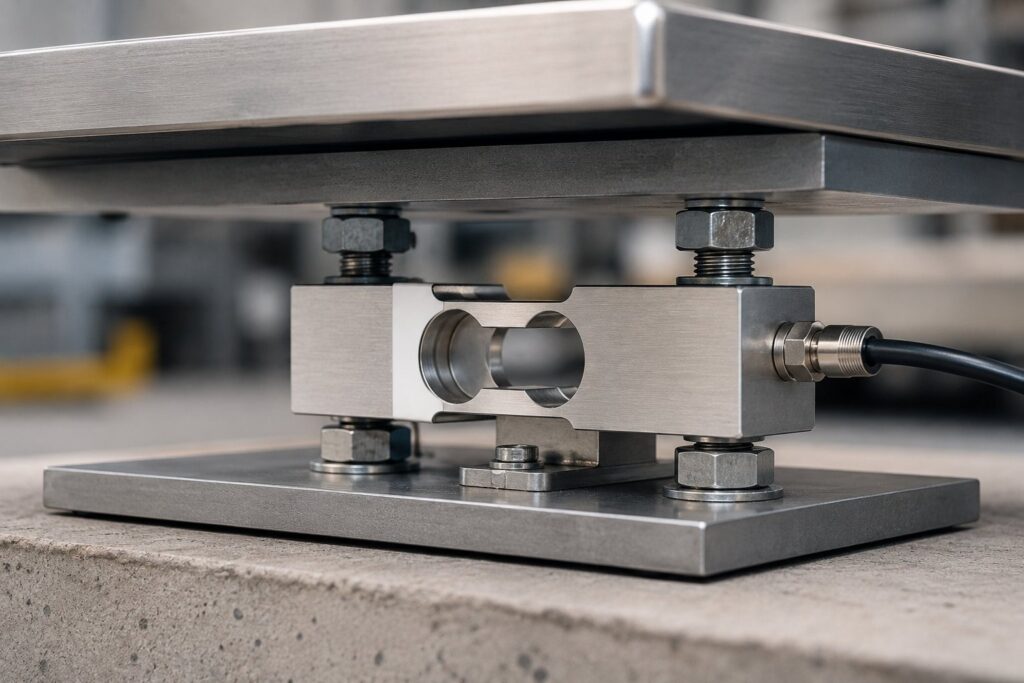
If you have ever wondered why one weighing scale feels rock-solid while another drifts and gives shaky readings, the answer usually comes down to one small component tucked inside the housing: the load cell. It converts a physical load into an electrical signal, and picking the wrong one can quietly undermine an otherwise good machine. Whether you are setting up a warehouse floor scale or a busy supermarket counter, understanding load cell types is the first step toward reliable weighing, and it is why choosing the right weighing scale supplier matters as much as the equipment itself.
Table of Contents
What Exactly Is a Load Cell?
A load cell is a transducer that changes mechanical force into a measurable electrical output. That signal travels to an indicator, which converts it into the number on the display. Almost every scale, from a tabletop unit to a full-size truck weighbridge, relies on one or more load cells working in sync. Get the load cell wrong, and no software will fix inaccurate readings.
The Main Types of Load Cells You’ll Actually Find on a Scale
Nearly every commercial and industrial weighing scale on the market today is built around strain gauge technology. Inside each cell, gauges bonded to a metal body change their electrical resistance as the body flexes under weight, and that resistance change is what gets converted into a reading. Within that single technology, the shape of the metal body is what separates one type from another.
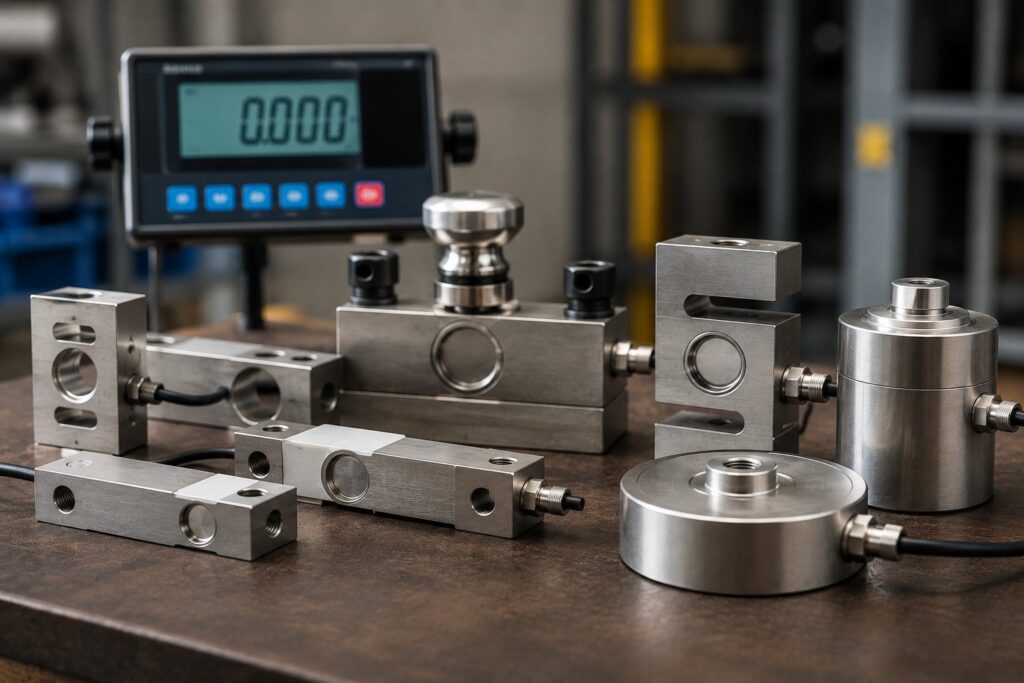
Single Point Load Cells Built to sit under a single mounting point, these tolerate off-centre loading well, making them a natural fit for bench scales and small platforms.
Single Shear Beam Load Cells Fixed at one end with the load applied at the other, shear beam cells are compact and low-profile, common in floor scales and lower-height platforms.
Double Shear Beam Load Cells Fixed at both ends instead of one, these handle heavier, uneven loading with greater stability, making them a common choice for larger platforms and weighbridges.
Bending Beam Load Cells an economical option for lighter capacities, bending beam cells are used in hoppers, tanks, belts and packing machines.
S-Beam (S-Type) Load Cells Shaped like the letter S, these measure both tension and compression, suiting suspended loads such as hopper or crane scales.
Column and Pancake Load Cells Designed for high capacity, these are the usual choice for heavy industrial loads, silo weighing, and truck scales.
How to Select the Correct Load Cell: A Weighing Scale Supplier’s Checklist
Selecting a load cell is not a one-size-fits-all decision, and this is where working with an experienced weighing scale supplier genuinely pays off.
1. Application and Environment – A truck weighbridge sitting outdoors in Dubai’s heat and dust needs a rugged, sealed shear beam or column cell, while a pharmacy counter scale indoors needs nothing more than a compact single point cell. Matching the cell to its operating environment prevents premature failure.
2. Capacity and Overload Protection – Every load cell has a rated capacity and should be chosen with a safety margin above the maximum expected load, not exactly at it. Repeated overloading can permanently damage the structure and shift calibration.
3. Accuracy Requirements – Retail transactions and pharmaceutical dosing demand fine accuracy, while bulk weighing on a wheel loader or container stacker can tolerate a wider tolerance. Knowing the required accuracy class in advance saves money.
4. Certification and Calibration – Trade-certified load cells matter for transaction-based weighing, since regulators expect legal-for-trade accuracy. A reliable weighing scale supplier should provide calibration certificates and after-sales support.
5. Number of Load Cells – Larger platforms and weighbridges usually use multiple load cells together, and small differences between them can cause corner errors. Periodic testing keeps such systems reading accurately.
Why the Right Supplier Makes the Difference
Even the best load cell won’t perform that much if it is poorly matched, installed or is uncalibrated. This is where the value of a dependable weighing scale supplier becomes clear, since specification, installation and calibration all affect daily accuracy. It also explains why many businesses in the UAE and Saudi Arabia prefer an established weighing scale dealer over piecing together components on their own.
HIRS Global has spent over five decades refining this selection process, offering load cells and complete weighing systems for industrial and retail use across the GCC. Their industrial products range covers weighbridges, floor scales, forklift and container stacker scales, built around strain gauge load cells from established brands such as Zemic, Vishay, and Tamtron.
Conclusion
Load cells may be small, hidden components, but they are the true heart of every weighing scale, quietly determining how accurate, stable, and durable your equipment will be. Single point, shear beam, bending beam, S-beam, and column cells each suit different loads and environments, and getting that choice right from the start saves money and prevents downtime later. Rather than guessing, it is worth consulting a knowledgeable weighing scale supplier who can assess your load, environment and accuracy needs before recommending a solution. HIRS Global’s long-standing experience as a weighing scale dealer in UAE and Saudi Arabia makes it a practical starting point for anyone looking to get their next weighing system right the first time.
FAQ
What is a load cell and why does it matter?
A load cell converts mechanical force into an electrical signal, which a scale’s indicator then translates into a weight reading. It’s the core component determining how accurate any weighing scale is. Get it wrong, and no amount of software calibration can fix the readings.
Why does capacity matter so much when selecting a load cell?
Every load cell has a capacity and choosing one with a safety margin above your expected maximum load is essential. Repeated overloading can permanently damage the cell’s structure and throw off its calibration over time
Why does the supplier I choose matter as much as the load cell itself?
Even the best load cell won’t perform well if it is poorly matched, poorly installed, or left uncalibrated. An experienced supplier handles specification, installation, and ongoing calibration — all of which directly affect daily accuracy — rather than leaving you to piece components together on your own.ted.