



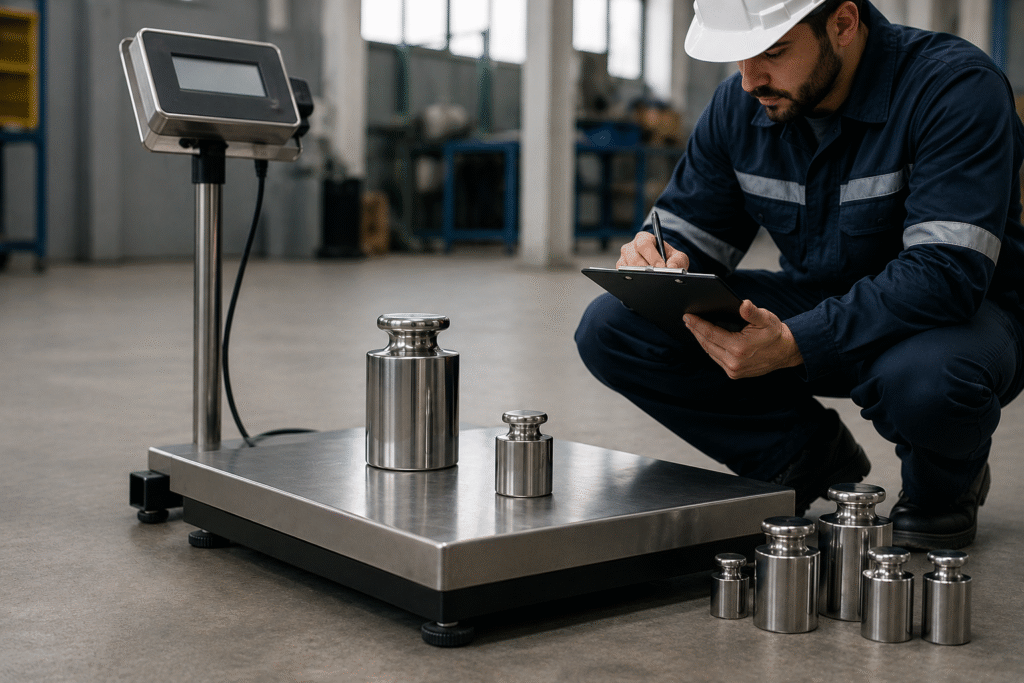
SASO compliance is needed if you operate a business in Saudi Arabia that purchases, utilizes or sells weighing equipment. The Saudi Standards, Metrology and Quality Organization (SASO) deals with how weighing instruments are approved, verified and maintained across the Kingdom. Ignoring it can lead to fines, rejection of shipment or equipment pulled from service. Here is what the rules actually say and what they mean for your day-to-day operations.
Table of Contents
SASO and Legal Metrology: The Framework You Need to Know
Saudi Arabia’s legal metrology framework is aligned with OIML recommendations, including OIML R 76 for non-automatic weighing instruments. This means Saudi Arabia’s technical requirements for weighing instruments directly follow the OIML R 76 standard, which covers non-automatic weighing instruments used in trade. That means any weighbridge or scale used to find the weight of goods in a commercial transaction should meet OIML R 76 requirements. This applies whether you are running a logistics depot in Riyadh, a food production facility in Jeddah, or a retail counter in Dammam.
Verification, type approval and legal metrology controls for the weighing instruments are administered by SASO’s Legal Metrology Program, Taqyees
The Four Requirements That Apply to Most Businesses
1. Type Approval
In Saudi Arabia, weighing instruments that are to be traded should carry a type approval. This confirms the model has been tested and meets OIML R 76 specifications. When you source equipment through a qualified weighing scale supplier, type approval documentation should come as standard. If a supplier cannot provide it, that is a problem worth addressing before purchase.
2. Accuracy Class
OIML R 76 divides instruments into accuracy classes: Class I, II, III, and IIII. For most commercial and industrial weighing applications in Saudi Arabia, Class III instruments are commonly used. This covers truck weighbridges at logistics yards, platform scales in warehouses, and checkweighers in food factories. Class II is required for higher precision applications, such as gold and jewellery trading, where price is determined per gram.
3. Initial Verification Before Use
A scale cannot simply be installed and used for trade. It must pass initial verification by a Taqyees-qualified verification body before commercial operation begins. This process confirms the instrument performs within its Maximum Permissible Error (MPE) under actual operating conditions.
4. Periodic Re-Verification
Verification is not a one-time event. Instruments drift over time due to wear, environmental factors, and mechanical stress. In Saudi Arabia, where summer temperatures regularly exceed 45°C across regions like the Eastern Province and Central Region, heat places real thermal stress on load cells and electronic components. Periodic re-verification by an accredited body is required to maintain legal-for-trade status. Businesses should ensure verification and calibration activities are completed on schedule to maintain compliance and measurement accuracy.
What Happens If You Are Not Compliant
SASO enforcement is active. Instruments found operating outside verified tolerances can be taken out of service immediately. For businesses where weighing determines billing, such as quarries, logistics companies or scrap metal dealers, this means operational shutdown until the equipment is re-verified and certified.
How to Stay Compliant
Work with a weighing scale supplier that understands what local regulatory requirements are, not just about equipment specifications. Your supplier should be able to confirm that any instrument they provide carries OIML type approval, is classified at the correct accuracy class for your application and comes with access to Taqyees-qualified verification bodies and approved verification entities .
HIRS Global (HAYAT INDUSTRIAL AND RETAIL SUPPLIES) is a leading electronic weighbridge and weighing scale supplier operating in both the UAE and Saudi Arabia, with a physical presence in Riyadh’s Industrial Area, Sulai Al Mashael. With over 54 years of experience in the weighing industry, HIRS Global supplies a full range of industrial and retail weighing solutions, including truck scales, weighbridges, platform scales, floor scales, and load cells, sourced from international brands including Tamtron, Zemic, Thames Side, Keli, and Vishay.
As a reliable industrial scale supplier serving the Saudi market, HIRS Global also provides repair, maintenance and calibration services, which are essential for keeping your equipment within SASO compliance year-round.
The Bottom Line
SASO weighing scale standards are built on the same international framework that governs legal metrology in most of the world. Type approval, correct accuracy class, initial verification and periodic re-verification are the four pillars. Get all four right and your operation runs without interruption. Skip any one of them, and you carry compliance risk that can stop your business at the worst possible time.
If you are unsure whether your current equipment meets SASO requirements, the first step is speaking with a qualified weighing scale supplier who can assess what you have and what you need.
FAQ
What is SASO compliance for weighing scales in Saudi Arabia?
SASO compliance refers to meeting Saudi legal metrology requirements for weighing instruments, including type approval, verification, and accuracy standards.
How can a weighing scale supplier help with SASO compliance?
A qualified supplier can provide approved equipment, documentation, calibration support, and assistance with verification requirements to help businesses maintain compliance.
Why is periodic verification important for weighing scales?
Periodic verification helps ensure weighing equipment continues to provide accurate measurements and remains compliant with Saudi legal metrology requirements throughout its service life.